
The Coverdale Method: turning good people into a strong team
Seven steps, four thinking aids and an honest review: a shared way of working that has proven itself in organizations for more than 60 years.
Where the method comes from
What do successful teams do differently?
Ralph Coverdale did not answer this question with a theory – but with an experiment.
Learn more about the experiment
He brought people together, some of them literally off the street, gave them tasks and watched how they organized themselves step by step – and how they got a little better with every review. Together with the Oxford psychologist Bernard Babington Smith, his former teacher, he distilled the Coverdale Method from these observations. Learning from experience was a completely new field at the time – Coverdale was one of its pioneers, long before David Kolb published his well-known model of experiential learning in 1984.
A little like what Michelangelo is said to have remarked about his David: the figure is already in the stone, you just have to set it free. The method was already there – in the way successful groups work. And with it experiential learning: learning from what you do yourself and then consciously review.
The result is a way of working that is used in organizations all over the world today. It is not a collection of individual tools but a coherent system of attitude and approach – like a Swiss army knife: versatile, robust and ready to use.
Sources: Ralph Coverdale (Wikipedia) · Bernard Babington Smith & Alan Sharp (1990): Manager and Team Development. Ideas and Principles Underlying Coverdale Training, Heinemann · David A. Kolb (1984): Experiential Learning. Experience as the Source of Learning and Development, Prentice Hall
Clarify aims and create a shared understanding – before anyone starts running.
Work on what matters and invest time, energy and resources where they make a difference.
Agree on the approach together, assign responsibility clearly – and stand by it.
» Since we started working with the Coverdale Aims Grid, there are hardly any misunderstandings when we delegate. That saves an enormous amount of time – and even more frustration. «
Manager, IT services provider
The Coverdale Approach
Step by step to the result
The Coverdale Approach is at the heart of the Coverdale Method: seven steps teams use to tackle any task together – from understanding the task to the review. It’s not a rigid rulebook but a compass: when new insights shift things, the team goes back to aims, information, or the plan. That way, everyone works toward the same aim instead of past each other.
01 · Task
Understand the task
It all starts with clarifying the task. What is it about? Who is giving the task? How much room for manoeuvre is there? Which expectations and constraints need to be taken into account?
Aim of this stepCreate a shared understanding of what is to be worked on.
02 · Aims
Create clarity about the aim
We clarify which stakeholders are relevant, what purpose the task serves, which end result is to be achieved and how success can be recognized. The Coverdale Aims Grid helps to take different perspectives into account and to develop a shared understanding of the aim.
Aim of this stepKnow what is to be achieved and how we will recognize whether it has been successful.
03 · Information
Gather the necessary information
What information do we have? What else do we need to know? Which assumptions should be checked? We distinguish between relevant facts, open questions and uncertainties – and focus on the information that is actually needed for the task.
Aim of this stepCreate a sufficiently sound basis for the next steps.
04 · What needs to be done?
Determine what needs to be done
Based on the agreed aims and the available information, we clarify which tasks and activities are necessary. We look at possible approaches, recognize connections and make dependencies visible.
Aim of this stepGain clarity about what work is required to achieve the aim.
05 · Plan
Agree on the approach – and commit to it
We decide who takes on which tasks, when results are due and how those involved coordinate their work. A shared plan creates commitment and makes progress verifiable.
Aim of this stepAlign tasks, responsibilities and deadlines.
06 · Action
Put the plan into practice
Those involved carry out the agreed tasks, coordinate with each other and work together towards the aim. New insights and changing conditions are taken into account – where necessary, aims, tasks or plans are adjusted.
Aim of this stepAct together and achieve the aim.
07 · Review
Review the result and the way there
First the result: we check it against the purpose and the agreed success criteria – whether someone personally likes it does not matter. Then the way there: everyone first reflects individually on what helped or hindered achieving the aim and what they personally have learned. This is shared. The group then agrees on what it will try out in the next round to improve collaboration – and, if a partial result does not meet the criteria, on the content as well.
Aim of this stepLearn from the result and the collaboration – and do even better together in the next round.
The four thinking aids
Simple as tools. Powerful in combination
Four thinking aids make the approach tangible in everyday work. Their value lies not in filling in a form but in the principles behind them: create clarity first, separate information from tasks, make responsibility visible and learn consciously from experience.
What are we aiming for?
The Coverdale Aims Grid
Four questions before deciding and planning:
- Who are we doing this for – who are the stakeholders?
- What purpose are we pursuing?
- What end result do we want?
- How will we recognize success?
Who does what by when?
The Planning Grid
It structures what we need to know and what needs to be done – and sets binding responsibilities and deadlines. At a glance, everyone can see what they contribute.
The bridge between the Aims Grid and a concrete plan.
More in the white paper (German) →How much responsibility do we hand over?
The Delegation Funnel
It clarifies how much room for manoeuvre comes with a task – from a clearly defined assignment to full responsibility for the result.
This way, both sides know what needs to be agreed and what does not. Delegating becomes a conscious decision instead of a misunderstanding.
What do we learn from it?
The Review
It looks at two things – and that is exactly what makes it so effective:
experiential learning
Doing instead of talking about it
Experiential learning is the heart of every Coverdale training: people learn from what they do themselves – and from the review afterwards. We always start with process competence, that is, how people work together. On this basis we build skills: by doing, not by listening.
The group receives a task and plans its approach.
It carries out the plan – with everything that goes with it.
The decisive learning step: does the result meet the criteria? What helped, what was difficult – and what will we try next time?
Trainers link the experience with models and tools.
What has been learned flows straight into the next task.
Skills come from repetition. One day creates awareness – two to three days make it applicable.
Terms and models come via e-learning from the E-Academy, so that training time is reserved for practice.
Ralph – the Coverdale AI Coach supports application in everyday work over several weeks.
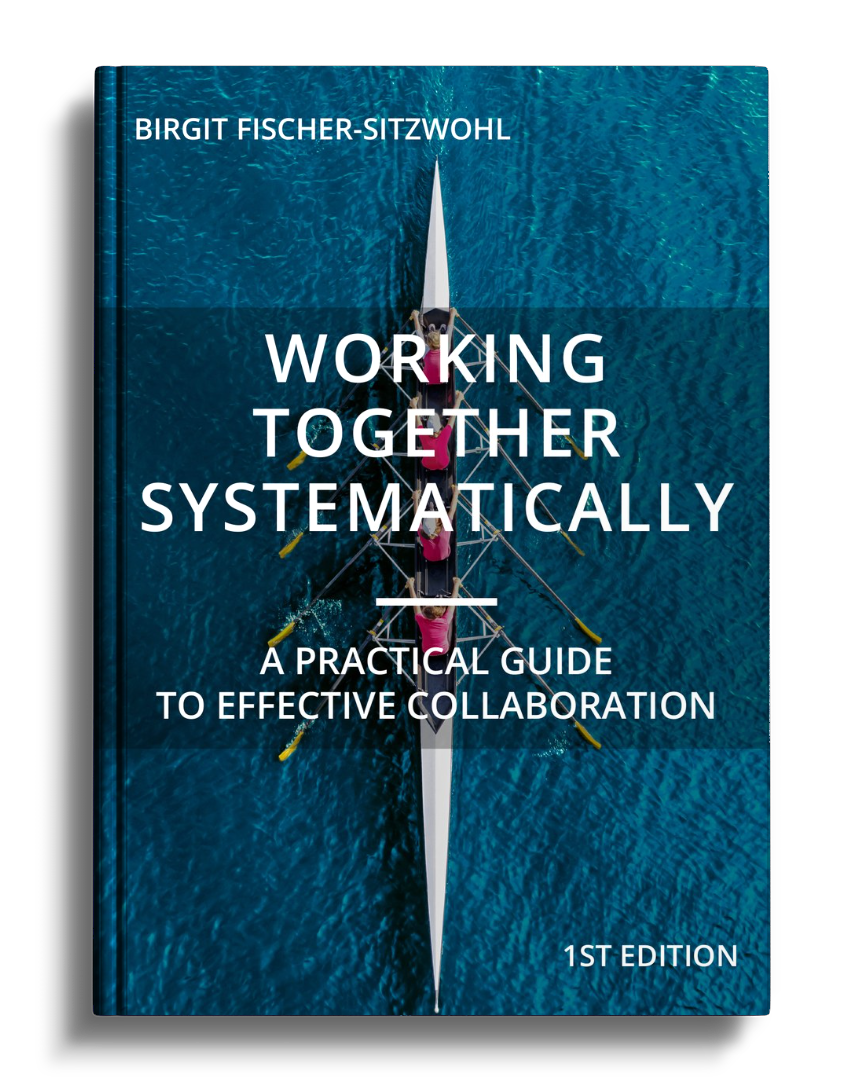
The book on the method
Working Together Systematically
How managers, project leaders and self-employed professionals use the method in everyday work – told through four people and their real challenges, with guiding questions to try out right away.
More about the bookFrom the individual to the organization
Where the method makes a difference
The method works on three levels – and it unfolds its full power when more and more people speak the same language.
Individuals organize themselves
Anyone who masters the method approaches tasks in a structured way, does not get lost in details and works towards the aim – a skill from which every individual benefits in everyday work.
To the training programsTeams find a common language
The seven steps become the ground rules of collaboration: everyone knows what comes next – even if their personal preference lies elsewhere. This way the team moves forward together and uses everyone's resources and skills.
Develop teamsImprove collaborationThe organization develops an attitude
Issues are approached in a structured way and everyone knows the tools. Instead of arguing about who is right, aims are negotiated – and pursued in a more linear way or in cycles, depending on the situation and the level of uncertainty. That saves a lot of time.
Establish a systematic approach to collaborationFrequently asked questions
Questions about the Coverdale Method
What is the Coverdale Method?
The Coverdale Method is a systematic approach to collaboration. It combines clear aims, a structured approach and shared learning. Three principles shape it: Clarity (clarify aims), Focus (work on what matters) and Alignment (agree on the approach together).
Which steps does the systematic approach include?
Seven steps: Task, Aims, Information, What needs to be done?, Plan, Action and Review. The steps are not a rigid sequence – new insights can lead to aims being clarified again or plans being adjusted.
What is a review?
In the review, those involved examine the result and the way there. The result is measured against the purpose and the agreed success criteria – personal taste plays no role. For the way there, everyone first reflects individually on what helped or hindered achieving the aim and what they personally have learned. This is shared. The group then agrees together on what it will try out in the next round to improve collaboration – and, if a partial result does not meet the criteria, on the content as well.
Which tools belong to the method?
Four thinking aids: the Coverdale Aims Grid for a shared understanding of aims, the Planning Grid for tasks, responsibilities and deadlines, the Delegation Funnel for the right room for manoeuvre when delegating, and the review – as a result review and a process review.
Where is the Coverdale Method used?
On three levels: individuals use it to organize their own work in a structured, aim-oriented way. Teams use the seven steps as shared ground rules for their collaboration. And in organizations the method becomes an attitude: issues are approached in a structured way, aims are negotiated and pursued in a more linear way or in cycles depending on uncertainty – in leadership, teams, projects and change processes.
How do you learn the Coverdale Method?
Through experiential learning: participants work on real tasks, review the result and the approach and transfer the insights into their everyday work. The starting point is always process competence – how people work together. Knowledge comes beforehand via e-learning, and transfer is supported by Ralph – the Coverdale AI Coach. The book “Working Together Systematically” offers a written introduction.
Where does the Coverdale Method come from?
In the 1960s, Ralph Coverdale observed what successful teams do differently. These observations gave rise to a way of working based on attitude and a systematic approach, which Coverdale has been using and developing in organizations worldwide ever since.
How long does it take to learn the method?
To build solid skills, we recommend at least two, ideally three training days. One day creates awareness – only practising, reflecting and practising again makes it applicable. After that, the method becomes established in everyday work, supported by reviews and Ralph – the Coverdale AI Coach.
What is experiential learning?
Experiential learning is the learning format of the Coverdale Method: participants work on a real task, then review the result and the collaboration and apply the insights in the next task. Learning therefore comes from one's own experience – not from lectures. Trainers add models and tools where they help.
Let's talk
Where would a systematic approach make the difference for you?
Whether training, team development or introduction across the whole organization – we will find the right starting point with you.
Fill in the form