
Why Leaders Need to Experience AI, Not Just Understand It
More Than a Book About AI Literacy
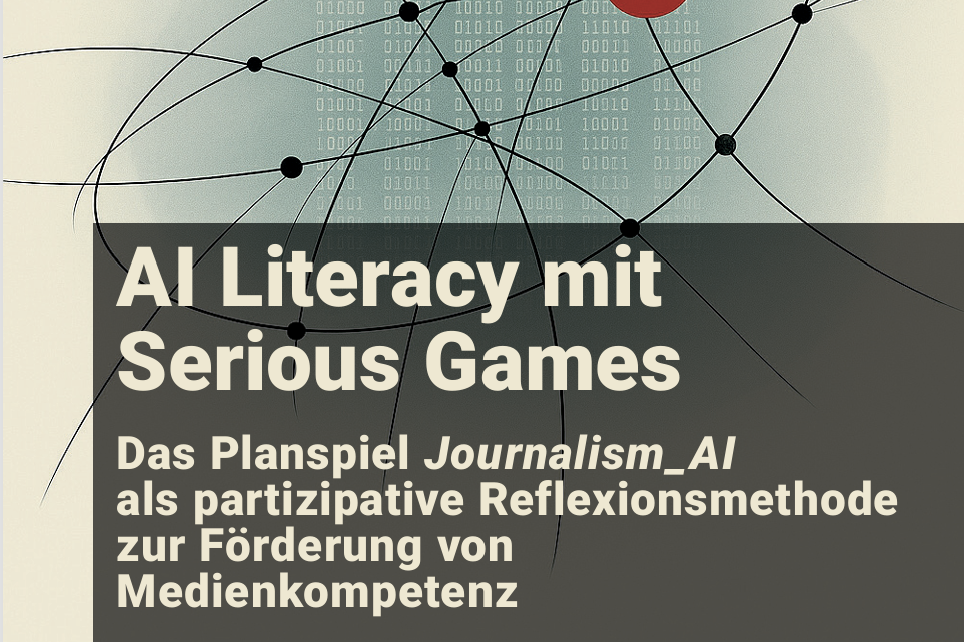
With AI Literacy Through Serious Games, editors Sascha Ferz, Elisabeth Hödl, and Thomas Tripold have created a volume that, at first glance, appears to be aimed primarily at journalists, legal professionals, and educational institutions. A closer look, however, reveals something much broader: a highly practical exploration of one of the defining leadership challenges of our time—how individuals and organizations can learn to engage with artificial intelligence responsibly and effectively.
While many books on AI focus on technological advances, use cases, or regulatory issues, the authors take a different approach. Their central question is how people can understand both the opportunities and the risks of AI and act responsibly in complex decision-making situations. In doing so, they bring a topic to the forefront that is becoming increasingly important for leaders: AI literacy.
Understanding Complexity Rather Than Searching for Simple Answers
One of the book’s greatest strengths is its analysis of the societal changes driven by digitalization and artificial intelligence. The authors argue convincingly that the real challenge is not the technology itself, but the growing complexity of modern systems. Economic, political, and technological developments are becoming increasingly interconnected, creating situations that can no longer be managed through linear thinking alone.
For leaders, this insight is particularly relevant. The introduction of AI affects far more than processes and workflows; it also reshapes responsibilities, collaboration, and organizational culture. Successful AI adoption therefore requires the ability to recognize interdependencies, balance competing interests, and make sound decisions in the face of uncertainty.
AI Literacy as a Leadership Responsibility
Another key focus of the book is the European AI Act and the concept of AI literacy embedded within it. The authors make it clear that organizations will soon have little choice but to foster the conscious and responsible use of AI in a systematic way.
This goes far beyond technical knowledge. What is required is the ability to assess opportunities and risks, understand the impact of AI on people and organizations, and make decisions at the intersection of innovation, responsibility, and regulation. In this sense, AI literacy becomes a core leadership responsibility.
AI Literacy Develops Through Experience
The book’s distinctive strength lies in its educational approach. Using the simulation game Journalism_AI as an example, the authors demonstrate how complex questions surrounding artificial intelligence can be transformed into meaningful learning experiences. Participants take on different roles and engage with realistic conflicts that can arise when AI is introduced into professional environments.
As a result, learning moves beyond theoretical discussion and becomes a tangible experience. The opportunities and risks of AI are not merely analyzed—they are experienced firsthand and reflected upon. For topics characterized by uncertainty, competing objectives, and complex interactions, this experiential approach offers significant value.
Leadership in the Age of Intelligent Systems
One idea runs throughout the entire book: technology alone does not solve societal or organizational challenges. What remains essential is the human ability to interpret developments, assume responsibility, and actively shape the future.
This perspective aligns closely with modern leadership thinking. Effective leadership today is less about having all the answers and more about providing direction in complex and uncertain environments. The book demonstrates how game-based learning formats can help organizations introduce new technologies in a thoughtful, responsible, and reflective way.
What Leaders Can Take Away from This Book
For leaders, AI Literacy Through Serious Games offers one particularly important insight: the successful use of artificial intelligence is less a technological challenge than a leadership challenge. Anyone introducing AI into an organization must provide direction, reconcile differing interests, and make responsible decisions under conditions of uncertainty.
The authors show that these capabilities are developed especially effectively through experiential learning formats. Simulations enable participants to experience complexity firsthand, explore different perspectives, and reflect immediately on the consequences of their decisions.
In doing so, they embrace an approach that has formed the foundation of Coverdale programs for more than sixty years: people develop lasting competence through direct experience, shared reflection, and the deliberate transfer of learning into practice.
The book is also available as an open-access publication:
https://library-publishing.uni-graz.at/index.php/lp/catalog/book/81
Recent Comments