
The Planning Grid – Bringing Order to Chaos
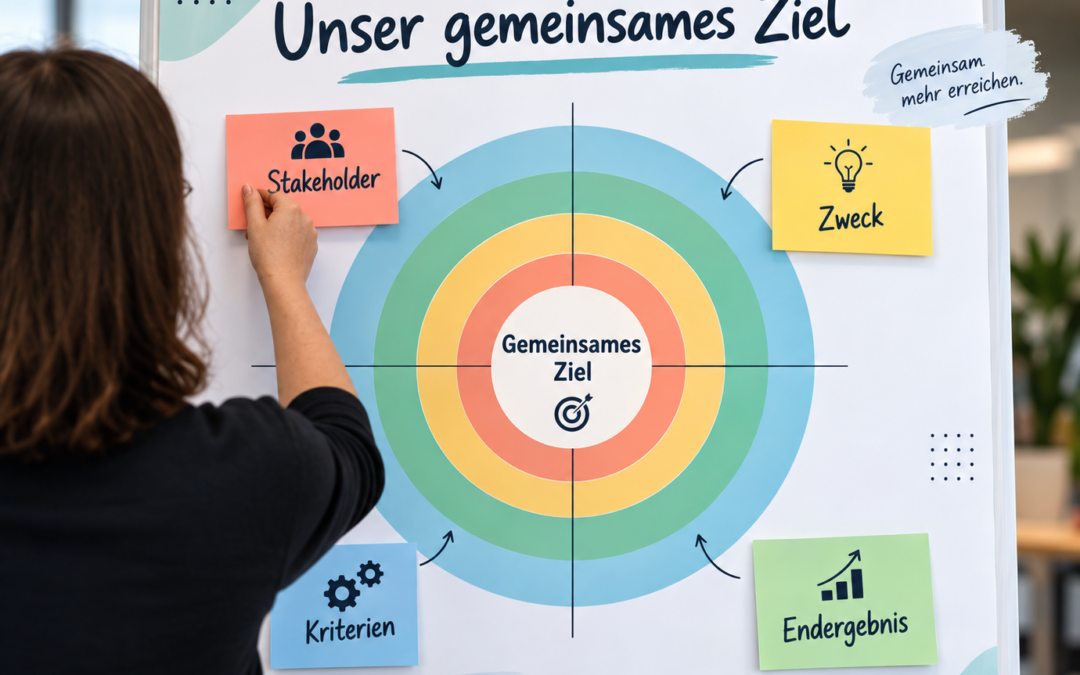
As a longtime Coverdale trainer, I grew up professionally with the Coverdale Aims Grid, and process reviews are part of my everyday training practice.
In this edition of the Toolbox, I want to introduce another important tool for effective collaboration: the Planning Grid.
While the Aims Grid helps us clarify what we want to achieve together and why it matters, the Planning Grid brings structure to how we get there.
It serves as both a central place for gathering information and a working record of our progress. Everything has its place here: information, ideas, open questions, risks, resources, and, ultimately, the specific tasks that need to be completed.
The Planning Grid follows a simple but essential logic:
- Gather information. Capture everything you already know without jumping to conclusions or making premature judgments. Identify any missing information you are already aware of.
- Identify what needs to be done. Use the information you have gathered to determine the specific tasks that need to be completed.
- Create a plan. Only now do you decide: Who does what, and by when?
In practice, teams often skip that first step. They jump straight into assigning tasks and, as a result, lose sight of the bigger picture.
The Planning Grid helps prevent exactly that. It ensures that no information gets lost, everything remains visible, and tasks are assigned only once the team has a clear understanding of what needs to be done.
The Planning Grid
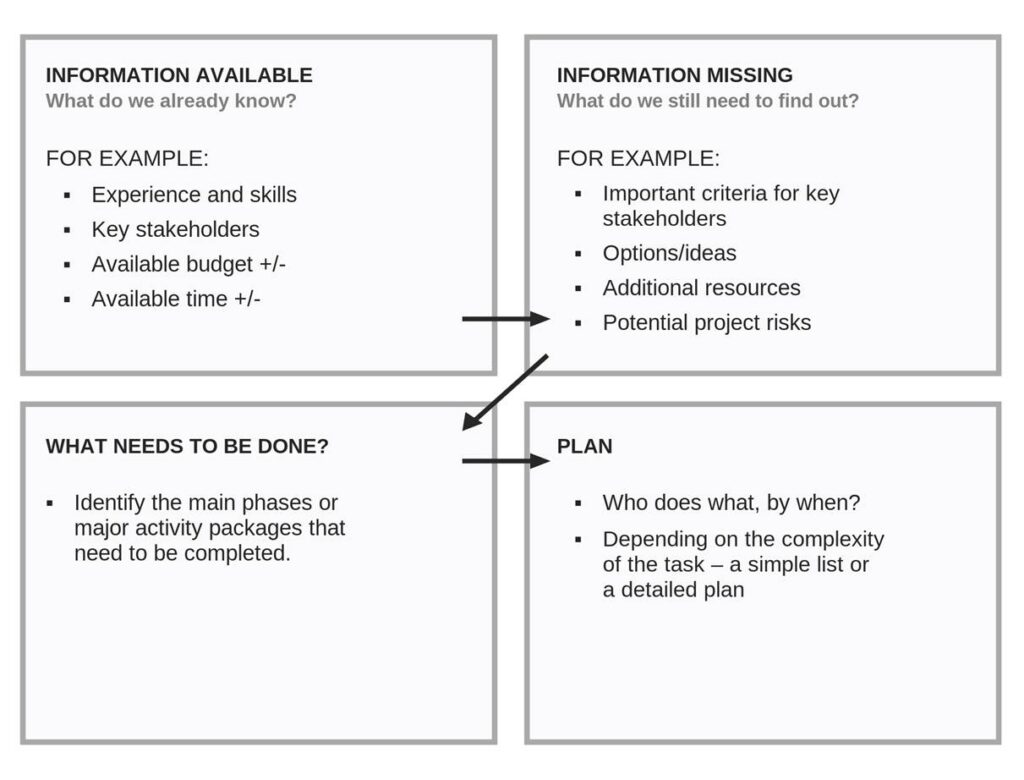
The value of this tool becomes particularly clear when working with clients. Alongside their objectives, clients often share additional information throughout the discussion: constraints, concerns, and lessons learned from past experiences.
Without a clear structure, these details can easily get buried in the conversation, come up repeatedly, or be forgotten altogether. The Planning Grid gives them a designated place and ensures they receive the attention they deserve.
Many teams initially assume that they need to complete the Aims Grid before moving on to the Planning Grid. In practice, however, we have found that using both tools in parallel works much better.
While the Aims Grid establishes the big picture — stakeholders, purpose, success criteria, and end result — the Planning Grid captures everything that comes up along the way: constraints, risks, resources, open questions, what needs to be done, and who will do what by when.
This makes one thing clear: The Planning Grid is not just another form to fill out. It is the bridge between defining your aims and turning them into a concrete plan.
Recent Comments